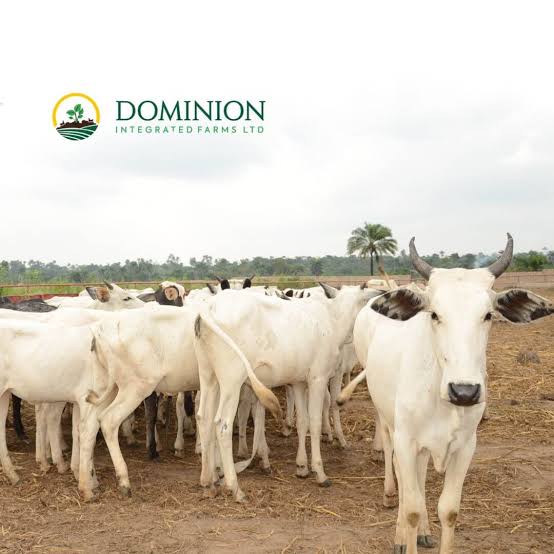

Opening Nigeria’s beef market to imports from the United States could undermine domestic livestock production and reverse years of investment in the agricultural value chain.
“I just read a few weeks ago; it was an advertisement that did not come from Nigeria, but from the United States. We have now opened our beef market to American beef. That’s going to wipe out livestock,” Sanusi said.

He argued that Nigeria must be careful about policies that expose local producers to imported food without considering the long-term consequences for domestic production, investment and employment.
Sanusi’s comments came while he was discussing the impact of recent food-import policies on farmers and agro-processors, particularly following the sharp rise in food prices.
He said the government’s response to higher food prices should not focus solely on bringing down consumer prices through imports, but should also protect the productive capacity built by farmers, processors and other businesses across agricultural value chains.
According to him, Nigeria had spent years supporting agricultural value chains and investing in processing facilities, only to risk undermining those investments when food imports were used as a response to rising prices.
He cited the rice industry as an example, saying investments had been made in rice production and milling before policy changes reopened the market to imported rice.
“Imported rice from Thailand, imported rice from India, basically wiping out domestic production, and that is going to take another 10, 20 years to rebuild,” he said.
Sanusi said a similar outcome could occur in the livestock sector if imported beef becomes a substitute for locally produced meat.
“I’m not talking about importing computers, importing beef. We can’t do that,” he said.
He linked the livestock sector to wider economic and social issues, arguing that the loss of livestock assets could have consequences for rural livelihoods.
“You already have problems with Fulani herdsmen who have lost their cows have become bandits. You now wipe them out with imports, you know, from the United States, they become guns again,” he said.
Sanusi said the issue illustrated the need for policymakers to consider the broader effects of economic decisions rather than pursuing policies based solely on their immediate impact on prices.
“For the politicians, it’s a protection. Breaking down food prices is fantastic for the government. Everybody’s happy. But for the economy, it has set us back 10 years,” he said.
He urged the government to integrate monetary, fiscal and structural policies so that measures aimed at easing pressure on consumers do not simultaneously weaken domestic production.
Sanusi also argued that government support for vulnerable households could be better targeted through cash transfers or direct assistance, allowing poor Nigerians to maintain consumption while preserving markets for domestic producers.
“If they’re buying local goods and services, you create a market, and you create a market, and then you create something for the producers,” he said.
The former CBN governor maintained that Nigeria’s financial-sector reforms must also be connected to productive economic activity, stressing that financial inclusion would have limited impact if farmers, traders and manufacturers continued to face structural constraints.
He said policymakers needed to ensure that financial flows supported production, jobs and incomes rather than merely facilitating transactions.
Sanusi’s remarks come amid continued efforts by the government to address food inflation and improve food availability, with policymakers facing the challenge of balancing consumer affordability with the protection and expansion of domestic agricultural production.