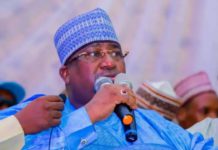
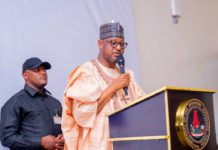
Katsina State Governor, Malam Dikko Umaru Radda, has commissioned the upgraded Matazu Semi-Urban Water Supply Scheme, reaffirming his administration’s commitment to expanding access to safe, reliable and sustainable water supply across the state.
Speaking at the commissioning ceremony in Matazu Local Government Area, Governor Radda said the project represented another important intervention by his administration to improve water supply and enhance the quality of life of residents in the area.
The Governor recalled that the Matazu water scheme was originally established in 1996, noting that his administration had significantly upgraded the facility to increase its capacity and improve water supply to the community.

He said the upgraded scheme now comprises 17 wells, providing additional capacity for the production and distribution of potable water to residents of Matazu and surrounding communities.
According to Governor Radda, the scheme also has a ground storage tank with a capacity of about 350,000 litres, while the elevated tank has a storage capacity of approximately 15,000 litres.
He added that the project had been equipped with solar-powered installations to reduce dependence on public electricity supply and ensure more reliable water production and distribution.
Governor Radda said the investment, which runs into billions of naira, reflected the seriousness attached by his administration to the provision of essential infrastructure and improved public services across Katsina State.
The Governor stressed, however, that the sustainability of the facility would depend on responsible management and strong community ownership.
He urged residents and community leaders to protect the water infrastructure, use the facilities responsibly and support measures aimed at ensuring their regular maintenance.
“These are modern water facilities that require proper care and effective community monitoring. I therefore appeal to the people of Matazu to take ownership of this project and ensure that it continues to serve the community for many years to come,” Governor Radda said.
He disclosed that the community had constituted a committee to support the management and monitoring of the water scheme, urging its members to work closely with relevant government agencies to maintain the quality and functionality of the facilities.
Governor Radda also assured the people of Matazu that the requests and appeals presented by the community, particularly those relating to infrastructure and development, would be carefully considered by the state government.
He commended the Member representing Musawa/Matazu Federal Constituency, Hon. Abdullahi Aliyu Ahmed, for his contributions to the development of the area, describing him as a leader who had demonstrated commitment to his constituents.
He particularly commended the people for their contributions to efforts aimed at improving security in the area, noting that peace and security remained essential for sustainable development.
Earlier, the Commissioner for Water Resources, Hon. Mannir Ayuba Sullubawa, said the Matazu water project formed part of the broader efforts of the Katsina State Government to expand and rehabilitate water infrastructure across the state.
He disclosed that almost eight locations had been selected by Governor Radda for the implementation of water works projects, describing the initiative as part of the administration’s strategy to improve access to potable water in communities.
The Commissioner appealed to beneficiary communities to prioritise the protection, proper use and maintenance of the facilities, stressing that community ownership was essential to sustaining government investments in the water sector.
He commended Governor Radda for his commitment to the development of water infrastructure and for providing the necessary support to ensure the successful implementation of water projects across the state.
Sullubawa said the Ministry would continue to work with communities and other stakeholders to ensure that water facilities remained functional and delivered the intended benefits to residents.
Also speaking, the District Head of Matazu, Alhaji Iro Maikano, commended the Katsina State Government for its various development interventions in the area, particularly the upgrade of the Matazu water scheme.
He expressed appreciation to Governor Radda for prioritising projects that directly affect the wellbeing of residents and appealed to the Governor to consider the construction of the Gwarjo-Mazoji road.
According to him, the road would improve access and connectivity for communities along the route and facilitate agricultural and irrigation activities in the area.
The District Head assured the government of the community’s support and cooperation in ensuring that the newly upgraded water facility was properly protected and maintained.
The commissioning ceremony was attended by the Member representing Musawa/Matazu Federal Constituency, Hon. Abdullahi Aliyu Ahmed; Chief of Staff to the Governor, Hon. Abdulkadir Mamman Nasir; Principal Private Secretary to the Governor, Hon. Abdullahi Aliyu Turaji; Alhaji Muntaka Badaru Jikamshi, Executive Director of Agricultural Services at the Sokoto Rima River Basin Development Authority (SRRBDA) and Chairman of the Board of Amana Microfinance Bank; Alhaji Aminu SDY; Alhaji Mansir Sarkin Arewa; members of the Katsina State Executive Council.
Also were the, Executive Director Coordinator of STOWASSA Katsina, Alhaji Ibrahim Lawal-Dankaba; Heads of RUWASSA; SURWASH; the Deputy Chairman of the Katsina State APC, Alhaji Bala Abu Musawa, who represented the State Chairman; local government chairmen, traditional and religious leaders, community representatives and other stakeholders.