

A rejoinder to Jadadi’ attack on the Nasir Idris administration
By Ahmed Idris
There is a curious paradox in opposition politics: those who demand accountability sometimes become remarkably unwilling to account for the evidence behind their own allegations.
The latest intervention by one Almustafa Jadadi of the African Democratic Congress (ADC) illustrates this contradiction rather too conveniently.
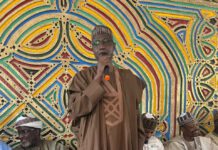
For nearly five minutes, Jadadi delivered a catalogue of accusations against the administration of Comrade Dr Nasir Idris, Kauran Gwandu. The performance was confident, the rhetoric animated and the conclusions emphatic. What was conspicuously absent, however, was the one ingredient that separates serious political scrutiny from partisan theatre: a sustained engagement with evidence.
The central proposition appeared straightforward: Kebbi is experiencing security challenges; therefore, the government has failed. Roads are being constructed despite insecurity; therefore, development is misplaced. Government publicity exists; therefore, governance is supposedly an illusion.
This is not an argument. It is a collection of political assertions assembled to produce a predetermined conclusion.
No government should be exempt from scrutiny. Indeed, the constitutional purpose of opposition is to question public expenditure, interrogate policy decisions and expose administrative failures. But opposition is not an alternative system of truth in which inconvenient facts can be discarded and allegations acquire the status of evidence through repetition.
Jadadi is entitled to criticise Governor Nasir Idris. He is not entitled to expect Kebbi people to suspend their judgment merely because he has spoken with conviction.
The more pertinent question is this: beyond identifying the state’s difficulties, what evidence has he presented to establish his allegations, and what credible alternative does he offer?
That is where the argument should begin.
SECURITY: ACKNOWLEDGING THE CRISIS WITHOUT ERASING THE RESPONSE
Insecurity is not a subject for political cosmetics. Communities affected by criminal violence, displacement and fear deserve more than official assurances or opposition sound bites. They deserve protection, measurable interventions and demonstrable improvements.
But Jadadi’s treatment of the security situation in Kebbi appears to rest on a rather convenient omission: the distinction between the existence of a security problem and the government’s response to it.
References to Sakaba, Kaoje, Zuru Emirate and other affected communities are legitimate subjects for public scrutiny. What is not legitimate is to invoke the suffering of these communities while excluding relevant government interventions from the discussion.
The Nasir Idris administration has reportedly provided operational vehicles, motorcycles, logistics and other forms of support to security agencies. It has also facilitated additional military presence and operational posts in strategic locations, including Sakaba and Kaoje.
These interventions deserve to be examined against their actual operational outcomes. How many personnel have been deployed? What improvements have followed? How many communities have experienced sustained security improvements? What is the operational assessment of the relevant security agencies?
These are the questions a serious opposition should be asking.
There are also reports of displaced residents gradually returning to some affected communities as security operations intensify. Security personnel have continued pursuing criminal elements across operational boundaries, including towards Zamfara State.
Such developments, where independently established, should form part of an honest assessment.
The government should not claim victory prematurely, just as the opposition should not declare failure simply because the challenge persists.
Security is a continuing national responsibility involving the Federal Government, state governments, security agencies and local communities. The constitutional command structures governing the armed forces and police must be recognised in assessing the limits and responsibilities of state administrations.
The governor’s contribution should therefore be judged by the resources committed, the quality of coordination, the effectiveness of interventions and the security outcomes achieved.
But Jadadi and his ADC cannot reasonably demand that every security incident be attributed to the governor while every government intervention is treated as though it never happened.
That is not accountability. It is selective accounting.
INFRASTRUCTURE: MUST A STATE STOP DEVELOPING BECAUSE IT FACES INSECURITY?
Perhaps the most revealing contradiction in Jadadi’s argument is its apparent suggestion that road construction becomes irrelevant in the presence of insecurity.
This is an extraordinary proposition, particularly in an agricultural state whose economic fortunes depend substantially on the movement of people, produce and commodities.
Should Kebbi suspend road construction until insecurity disappears? Should hospitals remain unrepaired? Should schools wait indefinitely? Should rural communities be denied access to markets because the security environment is imperfect?
Development and security are not mutually exclusive policy choices.
Indeed, functional roads can improve access to hospitals, schools, markets and administrative services. They can also facilitate the movement of security personnel and emergency responders.
A road is not rendered useless because insecurity exists somewhere along the route. Equally, constructing a road does not automatically resolve insecurity.
The proper debate is therefore not whether infrastructure should be abandoned, but whether projects are appropriately prioritised, economically justified, properly executed and responsive to the needs of the communities they are intended to serve.
Mustafa should engage that question rather than advance the peculiar proposition that development must be suspended until every national security challenge has been resolved.
EDUCATION AND HEALTH: FACTS CANNOT BE DISMISSED BY DECLARATION
The suggestion that the Nasir Idris administration has achieved nothing in education and healthcare requires a much more serious examination than the spokesperson appears willing to undertake.
Governor Idris comes from the teaching profession and previously held leadership responsibilities within the Nigeria Union of Teachers. That background does not automatically guarantee effective educational administration, but it makes the administration’s interventions in the sector particularly important to scrutinise.
According to the programme figures supplied by the administration, interventions include:
– Distribution of Android devices to 2,014 head teachers.
– Provision of thousands of tablets for educational purposes.
– Financial support to 17,620 verified teachers.
– Allocation of billions of naira for school furniture.
– Continued infrastructure investments in tertiary institutions and specialised health training facilities.
These are not trivial figures. They should be subjected to independent verification, but neither should they be dismissed through a sweeping declaration that nothing has happened.
The healthcare sector presents a similar picture. The administration has reported extensive rehabilitation and upgrading of more than 30 general hospitals and 167 rural health facilities, alongside investments in medical infrastructure and health training.
A government that announces projects must demonstrate their completion and functionality. An opposition that disputes those projects must equally provide evidence.
Neither press statements nor television appearances constitute an independent audit.
Mustafa and his ADC should therefore identify the specific educational and healthcare projects he disputes, provide verifiable evidence and explain the alternative policies his party would implement.
A blanket dismissal of government interventions is not a substitute for sectoral analysis.
WORKERS AND TEACHERS: POLITICAL IRONY IS NOT AN INDUSTRIAL RELATIONS POLICY
The attempt to turn Governor Idris’s background as a former NUT leader into an indictment of his administration is politically convenient but analytically incomplete.
A former labour leader should certainly be held to high standards on workers’ welfare. His previous advocacy creates legitimate expectations, not immunity from criticism.
However, the administration has reported the introduction of a N75,000 minimum wage and other interventions relating to workers’ welfare, retirement benefits and outstanding entitlements.
It has also committed resources towards gratuities and benefits for retirees and bereaved families.
The existence of these interventions does not settle every question about workers’ welfare. Implementation, payment timelines, outstanding liabilities and the purchasing power of salaries remain legitimate subjects for scrutiny.
But the ADC must distinguish between questioning the adequacy of government policy and pretending that the policy itself does not exist.
If the minimum wage is inadequate, explain why. If gratuities remain unpaid, identify the affected categories and outstanding liabilities. If workers have grievances, establish their nature and extent.
Workers deserve more than political symbolism. They deserve evidence-based advocacy.
AGRICULTURE: ANCHOR BORROWERS WAS AN INTERVENTION, NOT A PERMANENT DEVELOPMENT BLUEPRINT
The ADC member ‘s apparent fixation on the Anchor Borrowers’ Programme suggests an unfortunate misunderstanding of agricultural development.
The programme, introduced under the Buhari administration, played an important role in Nigeria’s agricultural financing landscape. Kebbi, with its substantial agricultural potential, was among the states associated with its implementation.
Its contribution should not be erased.
But neither should it become the permanent benchmark against which every subsequent agricultural intervention is judged.
Agricultural development requires continuity, adaptation and investment beyond a single financing programme. Irrigation, improved seedlings, fertiliser access, mechanisation, storage, processing, rural roads, market access and agricultural credit are all essential components of a sustainable agricultural economy.
The question is not whether Anchor Borrowers existed. It is what Kebbi’s agricultural development strategy currently contains, how much is being invested, how many farmers are benefiting and what measurable improvements are being recorded.
The administration should publish its agricultural performance indicators. The opposition should interrogate them with evidence and present its alternative.
Kebbi’s farmers cannot eat political nostalgia.
BILLBOARDS AND POSTERS: WHEN PUBLICITY BECOMES A SUBSTITUTE FOR POLICY DEBATE
The argument that the most visible development in Kebbi consists of the governor’s billboards and posters is perhaps the least substantial aspect of Jadadi’s presentation.
Publicity is not governance. But neither is the existence of publicity proof that governance is absent.
The relevant distinction is between communication about public projects and the projects themselves.
If the administration claims to have rehabilitated hospitals, let the facilities be inspected. If it claims to have constructed roads, let the roads be examined. If it claims to have invested in education, let the schools, equipment, teacher support and learning outcomes be assessed.
A billboard cannot substitute for a functioning hospital. But a political spokesperson’s sarcasm cannot demolish an actual hospital either.
If he believes that particular projects exist only on paper, he should identify them, specify their locations and provide evidence.
Counting posters is not a development audit.
FREEDOM OF EXPRESSION: THE CONSTITUTION IS NOT A POLITICAL PROP
The allegation that Kebbi has become a place where citizens cannot criticise the government is serious and should not be dismissed casually.
Freedom of expression is constitutionally protected. Citizens, journalists, civil society organisations and opposition parties must be able to question public authorities without intimidation.
But allegations of political persecution must also be established through facts.
Where an individual faces legal proceedings, the circumstances, charges, evidence and conduct of the relevant authorities should be examined. The existence of a legal process does not automatically establish persecution, just as the existence of a government does not make every prosecution legitimate.
Due process must be respected.
The release of an individual, by itself, does not establish the political conspiracy suggested by Mustafa Jadadi.
The opposition should provide the relevant particulars, identify any alleged violations and allow the facts to be examined.
Constitutional rights are too important to be reduced to convenient political talking points.
THE VICE PRESIDENT’S VISIT: WHY TURN AN OFFICIAL ENGAGEMENT INTO A POLITICAL CARICATURE?
The attempt to ridicule the Vice President’s visit to Kebbi on the grounds that he spoke about roads is another example of how political criticism can become detached from the substance of an event.
Official visits provide opportunities to discuss development priorities, assess ongoing projects, strengthen intergovernmental relationships and communicate policy commitments.
Infrastructure is a legitimate subject for such engagement, particularly in a state where connectivity is important to agriculture, commerce and public service delivery.
The Vice President’s comments should be assessed against the actual development projects discussed and the commitments made.
Similarly, the allegation that attendees at the political rally were paid ₦5,000 or ₦10,000 requires evidence.
Who made the payments? Through which channels? How many people were allegedly involved? Is there documentary or independently corroborated evidence?
Without answers to these questions, the figures remain allegations, not established facts.
Political rallies can be scrutinised. Public expenditure associated with them can be questioned. But invented or unsubstantiated figures cannot become credible simply because they make an attractive television sound bite.
THE MORE IMPORTANT QUESTION: WHAT EXACTLY IS THE ADC’S ALTERNATIVE?
This is ultimately where the opposition intervention should be judged.
Opposition politics is not an occupation defined by the number of government projects one can dismiss or the frequency with which one appears on television to condemn an administration.
It is a constitutional and democratic responsibility to scrutinise power, expose failures and offer credible alternatives.
Where is the ADC’s comprehensive security strategy for Kebbi? What is its financing model for education? How would it improve primary healthcare? What is its agricultural productivity agenda? What is its plan for rural infrastructure, workers’ welfare and youth employment?
How would it fund these proposals? What measurable targets would it set? What institutional reforms would it introduce?
These are not unreasonable questions. They are the minimum expectations of a political organisation seeking to persuade citizens that it possesses a credible alternative approach to governance.
An opposition party cannot build a development argument entirely around the proposition that the incumbent administration has failed. It must explain what it would do differently and why its proposed approach would produce better outcomes.
The people of Kebbi deserve more than an endless inventory of accusations.
GOVERNANCE IS NOT A PUBLIC RELATIONS CONTEST
Governor Nasir Idris is not entitled to a free pass. His administration should be judged by the quality of its decisions, the integrity of public expenditure, the functionality of completed projects, the welfare of citizens and its capacity to confront the state’s security challenges.
But the same standards of intellectual honesty must apply to those who criticise him.
It is possible to acknowledge road construction while questioning project quality. It is possible to recognise investments in education while demanding better learning outcomes. It is possible to acknowledge security deployments while insisting that communities must be protected more effectively.
That is what mature democratic debate looks like.
The choice is not between uncritical praise and indiscriminate condemnation. It is between evidence-based scrutiny and political argument constructed around selective facts.
Kebbi’s development challenges are real. Its security concerns are serious. Its citizens have legitimate expectations that government must continually strive to meet. None of these realities, however, justifies the wholesale dismissal of every reported intervention by the state government.
Jadadi may continue to criticise the administration. That is his democratic right. But criticism must carry the burden of proof, just as government claims must withstand independent scrutiny.
The opposition cannot demand transparency from government while treating evidence as optional in its own public commentary.
And that is the fundamental contradiction in his latest intervention: an attempt to make the government’s challenges the entire story while excluding the policies, projects, interventions and outcomes that ought to form part of the same assessment.
Kebbi needs an opposition that interrogates budgets, examines projects, challenges weak policies and offers workable alternatives. It does not need political commentary that mistakes accusation for investigation and repetition for proof.
The ultimate verdict on governance belongs neither to the governor’s publicity machinery nor to the Jadadi’s television spokesperson. It belongs to the citizens, informed by verifiable evidence, lived experience and measurable public outcomes.
That is the standard both government and opposition must be prepared to meet.
Ahmad Idris ,
Chief Press Secretary to the Executive Governor of Kebbi State.