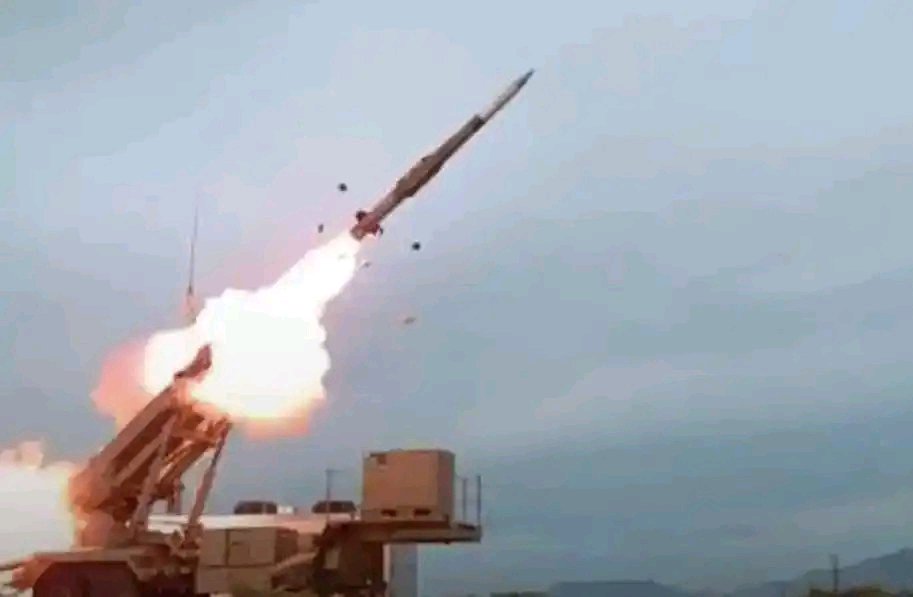

Tehran says it has begun producing ballistic missiles with ranges beyond the roughly 2,000 km limit it had publicly maintained for years.the Times of India (TOI) reported on Tuesday.
Iranian armed forces spokesperson Muhammad Acromia says the decision was driven directly by the ongoing conflict with the United States.

According to Acromia, Iran concluded that extending missile ranges had become absolutely necessary and that production of longer range systems has already begun.

That is a major shift in Iran’s publicly stated missile policy. For decades, Iranian officials portrayed the 2,000 km ceiling as a deliberate political decision, not a technological limitation.
European countries were not supposed to be targets of its missile program. But the logic appears to be changing as the conflict with Washington continues.
And to understand why this matters, look at what Iran already has. Iran possesses one of the world’s largest and most diverse ballistic missile arsenals.
Its program began expanding rapidly during the Iran Iraq war when Iran acquired short-range ballistic missiles from North Korea and subsequently developed the capability to produce them domestically.
By the late 1990s, Iran had also acquired the North Korean Hasang 7, giving it a medium-range strike capability that could put US military bases across the region and Israel within reach.
Since then, Iran has built an increasingly sophisticated missile and drone force, and much of that arsenal is designed around one basic problem.
Iran’s conventional military forces are significantly weaker than those of the United States and its regional allies. Missiles and drones help Tehan compensate for that disadvantage.