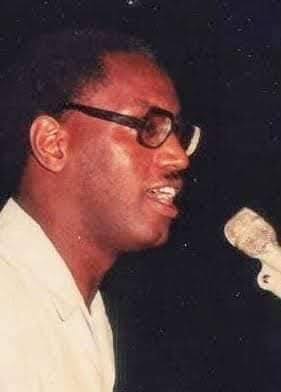

Amb Mustapha Dau
Dr. YB Usman was a prominent Nigerian historian, academic, and political activist who is widely regarded as one of the scholars who shaped modern Nigerian and African historiography. He was known for his significant contributions to the study of African history, politics, and development issues, as well as his fearless advocacy for social justice and democracy. He was the founder of the Centre for Democratic Development, Research and Training at Ahmadu Bello University, Zaria
During his career at Ahmadu Bello University (ABU), Zaria, from 1970 until his death, Usman earned a PhD in History and challenged colonial perspectives on African history. He was actively involved in Nigerian politics, advocating for the common people, and served in the Kaduna State Government. His work focused on liberating Nigeria from neo-colonialism and promoting a self-reliant economy. His published works include For the Liberation of Nigeria (1979) and Nigeria Against the IMF (1986). Usman founded the Centre for Democratic Development, Research and Training (CDDRT) in Zaria to support critical scholarship rooted in African realities. He is remembered as an intellectual icon and social critic. His daughter, Hadiza Bala Usman, also became a prominent public figure.
Dr. YB Usman was born in 1945 in Musawa local government area in Katsina Nigeria. His father was Durbin Katsina (a traditional title with kingmaker status in the Katsina Emirate) and a brother of Sarkin Katsina Usman Nagogo. His mother was a daughter of Sarkin Kano Abdullahi Bayero.
He attended Musawa Junior Primary School, Kankia Senior Primary School, Minna Senior Primary School and Government College, Kaduna. He then went to study at the University Tutorial College and then at University of Lancaster where he completed his studies with a degree in History and Political Science.
He returned to Nigeria in 1967 to become a teacher at Barewa College, Zaria where he taught until 1971. Usman started his graduate studies in 1970 at Ahmadu Bello University, earning his PhD degree in 1974. He started lecturing at the university as a part-time lecturer before being promoted to full-time.
During the Nigerian Second Republic, he was briefly the Secretary to the Kaduna State government under the PRP led Balarabe Musa administration.
Usman was a major figure among post colonial historians at Ahmadu Bello University, his outlook on African history involves support for the use of oral and linguistic sources along with written and archaeological sources. He felt all sources are subject to bias and that increased scrutiny of oral sources for distortions and colourings was not extended to many written sources by European writers. To him, the historian cannot be divorced from his education and molding as a scholar and the historicity of the European writers likely influenced some of their writings. Some of his reflections on the writing of African history includes a critique of Heinrich Barth, a respected source among Western scholars, Usman thought Barth was too focused on the physical and genetic characteristics of those he was studying which he felt was a result of the dominant traditions of nineteenth century European history writing.
Historical paradigm shift: He transformed the study of African history from a focus of tribal studies to a more dynamic understanding of identity and historical processes.
Dr Yusuf Bala Usman left behind a wife and six children upon his death on September 2005.