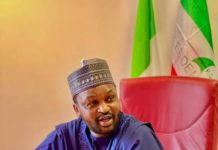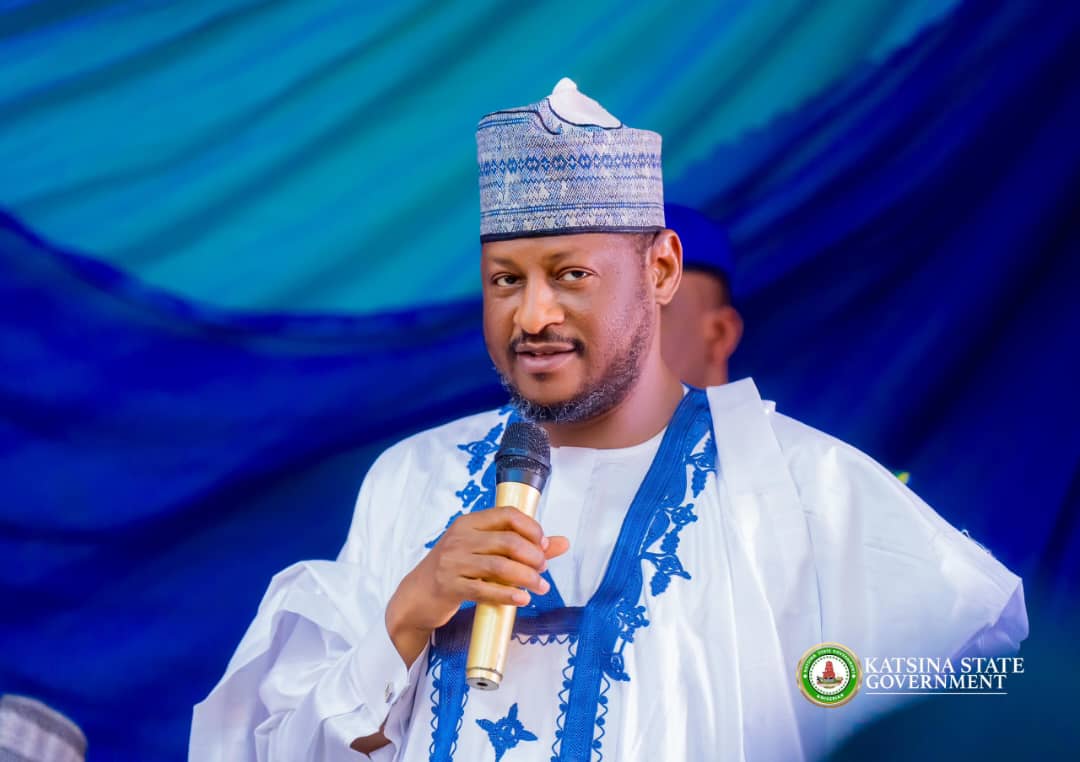

Katsina State Governor, Malam Dikko Umaru Radda, has called on investors and development partners to invest in the state’s N50 billion Carbon Portfolio while advocating for the adoption of the Katsina Green Growth Agenda (KAGGA) as a national template for Nigeria’s forest economy transformation.
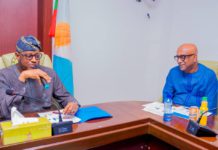
The Governor made this call through his representative, Prof. M. A. Al-Amin, Senior Special Adviser to the Governor on Climate Change, at the Nigeria Forest Economy Summit 2025 organized by the Presidential Committee on Economic and Financial Inclusion (PreCEFI) and Border Community Development Agency (BCDA) at the Presidential Villa, Abuja yesterday.
This was revealed in statement signed and issued by Ibrahim Kaula Mohammed, Chief Press Secretary to the Governor of Katsina State on
22nd July, 2025.
The statement said the Governor revealed that Katsina State has lost 15% of its forest cover with 60% of farmlands battling relentless drought, but emphasized that these challenges have birthed innovative solutions through KAGGA, launched in April 2025.
“Our forests, once imperilled by desertification, deforestation, and conflict, now form the bedrock of a bold new vision,” Governor Radda stated.
The Governor described KAGGA as a blueprint to harmonize ecological restoration with economic emancipation.
Under KAGGA’s four strategic pillars, the state plans to achieve remarkable targets by 2030: protecting 50% of farmland through Climate-Smart Agriculture and drought-resistant crops, electrifying 500 rural communities via solar mini-grids, and implementing community-led ecosystem restoration across degraded landscapes.
The statement further reads:
The Green Industrialization component will transform forest products into high-value goods, supported by the state’s N50 billion Green Investment Fund and strengthened climate legislation.
Governor Radda stated the economic potential of Katsina’s forest transformation, projecting the creation of 100,000 green jobs in sustainable forestry and eco-tourism by 2035. The initiative is expected to unlock N3.5 billion annually from waste recycling and N4.2 billion from plastic upcycling, while powering industries through a planned $500 million Solar Industrial Park in partnership with Genesis Energy.
The state’s 1,243 km² of forest reserves, though currently degraded, hold immense regenerative potential. Katsina’s trees currently sequester 194,425 tonnes of carbon, with the ongoing 1 million tree-planting drive targeting a 1.5 million ton CO₂ reduction by 2035.
“We invite partners to co-create Africa’s first sub-national carbon trade hub, leveraging our expertise in arid-land afforestation,” the Governor announced.
To ensure comprehensive implementation, Katsina has forged strategic partnerships with BCDA to secure forest corridors in frontier areas like Jibia, combating illegal logging through community policing and smart surveillance. Collaboration with PreCEFI will de-risk green investments through tax incentives for carbon projects and blended finance for smallholder agroforestry.
Governor Radda also emphasized the inclusive nature of KAGGA, noting that 30% of the budget targets women and youth-led enterprises.
“Our villages are not relics of the past—they are laboratories for the future. Here, waste becomes wages, scarcity becomes abundance, and tradition walks hand in hand with innovation,” he declared.
The Governor extended three specific calls to action to summit participants: first, invest in Katsina’s Carbon Portfolio through the N50 billion afforestation fund; second, adopt KAGGA as a national template to align state policies; and third, champion Border Forest Security by supporting PreCEFI’s “Green Borders” initiative against illegal logging.
Governor Radda announced plans for a Carbon Innovation Hub that will pioneer IoT-guided reforestation and blockchain-tracked carbon credits. These forests will form a crucial desertification shield protecting Nigeria’s food belt while demonstrating that climate vulnerability can be transformed into green vitality.
The summit, held at the Banquet Hall of the Presidential Villa, brought together key stakeholders in Nigeria’s forest economy, including government officials, development partners, and private sector investors committed to sustainable forest management and climate action.