
The Kebbi State Government has strongly criticised the African Democratic Congress (ADC) governorship
, Abubakar Malami, over his alleged attempt to exploit a United Nations Development Programme (UNDP) poverty report to discredit the administration of Governor Nasir Idris and score political points ahead of the 2027 general elections.
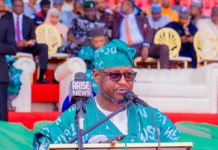
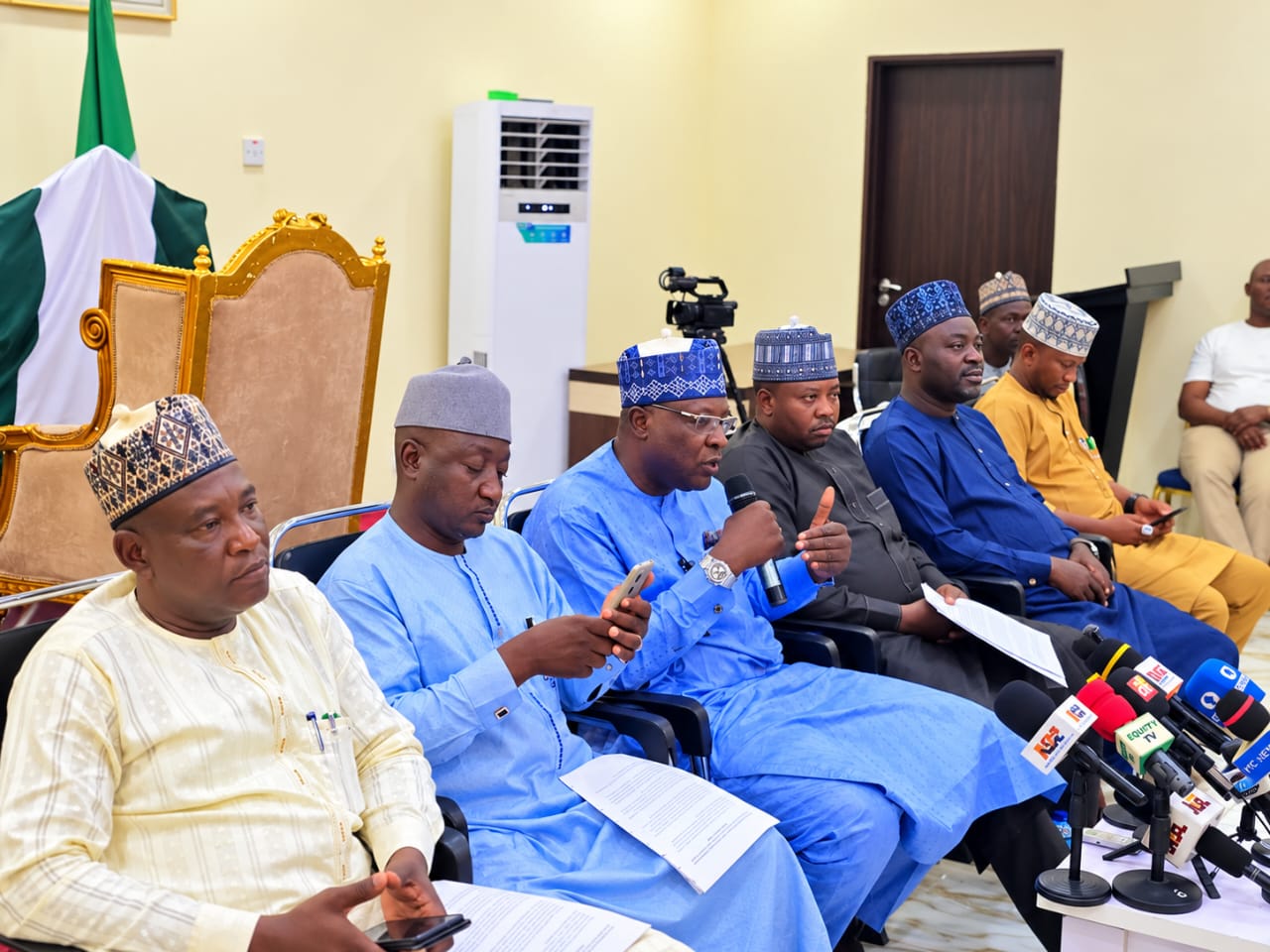
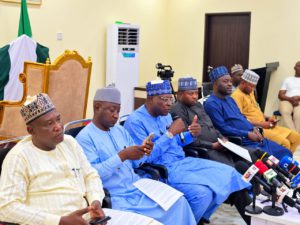
The Commissioner for Information and Culture, Hon. Yakubu Ahmed-BK, stated this on Sunday in Birnin Kebbi while reacting to Malami’s recent press briefings on poverty, insecurity and water scarcity in the state.
Ahmed-BK accused the former Attorney-General of the Federation of selectively presenting the report, which reportedly classified Kebbi among Nigeria’s poorest states, as evidence of the alleged failure of the All Progressives Congress (APC)-led government, without adequately considering the historical context of the data or the interventions currently being implemented by the state government.
The commissioner maintained that the government would not accept what he described as a politically motivated attempt to portray Kebbi as a state without progress, pointing to ongoing economic empowerment programmes, investments in healthcare infrastructure, the rehabilitation and equipping of hospitals, and sustained interventions in the education sector.
He described it as unfortunate that a prominent indigene of Kebbi would use the hardship of his own people as a political weapon rather than acknowledge the historical factors contributing to poverty and engage constructively with efforts to address the challenge.
“The question is not whether poverty exists in Kebbi; the question is what caused it, who had the opportunity to address it, and what is being done today to overcome it. Poverty is a serious social challenge, not a political trophy to be brandished for electoral advantage,” Ahmed-BK said.
The commissioner further questioned Malami’s moral authority to present himself as a credible alternative, given his prominent position in the administration of former President Muhammadu Buhari, during which, he argued, poverty, insecurity and economic hardship remained significant national concerns.
He challenged Malami to explain what he achieved during his years in federal government to improve the living conditions of Kebbi residents, arguing that anyone who occupied a position of considerable influence must also be prepared to account for the outcomes of the period in which he served.
Ahmed-BK also questioned the period covered by the UNDP data being cited by Malami, arguing that historical poverty statistics should not be presented as a definitive assessment of the performance of the current administration without examining their reference period, methodology and subsequent developments.
He said the present government should be assessed on the basis of verifiable achievements, policy interventions and measurable outcomes rather than what he described as the selective use of statistics for political propaganda.
The commissioner also raised questions about allegations of corruption and property acquisitions associated with Malami, insisting that public office holders must be held accountable for their stewardship. He called for any such allegations to be addressed through the appropriate legal and institutional processes, rather than allowing political rhetoric to replace due process.
“Those who had the privilege of serving at the highest levels of government cannot simply detach themselves from the conditions that prevailed during their tenure and then present themselves as though they were never part of the system they now criticise,” he added.
On insecurity, Ahmed-BK recalled the controversy surrounding Malami’s reported claim in June 2025 that about 200 people had been killed in Tadurga Ward of Zuru Emirate. He said subsequent statements attributed to local security authorities, local government officials and the Zuru Emirate Council disputed the reported casualty figure, placing the number of deaths significantly lower.
The commissioner maintained that reports of insecurity must be handled with accuracy, sensitivity and respect for victims and their families, warning against the circulation of unverified casualty figures that could heighten public anxiety or politicise human suffering.
He also questioned Malami’s record on security during his years in federal government, arguing that his present expressions of concern would carry greater weight if accompanied by a clear account of what he did to support communities affected by banditry while he held public office.
In contrast, Ahmed-BK said Governor Nasir Idris had made security a priority through logistical support for security agencies, improved operational welfare and direct engagement with communities affected by attacks.
He disclosed that the state government had procured hundreds of Hilux vehicles and thousands of motorcycles to strengthen the operational capacity of the military, police, Department of State Services, Nigeria Security and Civil Defence Corps, hunters and vigilante groups.
He added that the administration had supported the establishment of additional security formations and operational bases, including the 28 Armoured Brigade in Birnin Kebbi, the 281 Tank Battalion in Yauri and the 381 Artillery Regiment in Kaoje, alongside other security-related interventions.
According to him, Governor Idris had also visited affected communities, provided relief support and worked with relevant authorities to improve security coordination and protect lives and property across the state.
The commissioner argued that these interventions demonstrated a practical response to insecurity, in contrast to what he described as Malami’s tendency to focus on criticism without presenting a comprehensive and credible alternative.
On access to potable water, Ahmed-BK questioned Malami’s criticism of the state government in light of allegations surrounding the acquisition of properties reportedly linked to the former minister.
He cited reports concerning the confiscation of multiple properties in Birnin Kebbi, including a house allegedly associated with Malami’s child, arguing that the resources represented by such assets illustrated the scale of public investment that could otherwise have been directed towards essential services.
The commissioner suggested that the value of a single high-value property could potentially finance numerous community water projects, depending on the cost and technical requirements of each project.
He stressed, however, that allegations concerning the ownership, acquisition or confiscation of properties must be determined by the relevant authorities and should not be treated as established facts outside the applicable legal process.
Ahmed-BK further maintained that Governor Idris assumed office amid significant economic and developmental challenges and had since initiated interventions across infrastructure, agriculture, education, healthcare and social welfare.
He cited major road projects, the distribution of fertilisers and improved agricultural inputs, solar-powered water pumps, food assistance, teacher recruitment, scholarships and cash-transfer programmes as examples of the administration’s efforts to improve livelihoods and expand access to public services.
He argued that while no responsible government could claim to have eliminated poverty completely, the existence of persistent challenges should not be used to dismiss ongoing efforts or deny communities the benefits of projects already delivered.
The commissioner urged Malami and other political actors to move beyond the selective use of statistics and present verifiable policy alternatives capable of addressing poverty, insecurity, unemployment and inadequate access to essential services.
He also called on the people of Kebbi State to assess political claims critically, examine available evidence and judge the current administration by its record of performance, accountability and commitment to public welfare.
“Kebbi cannot afford to abandon a path of development simply because those seeking political power choose to magnify its challenges while overlooking the work being done. Our people deserve honest debate, responsible leadership and practical solutions—not the politicisation of their difficulties,” Ahmed-BK said.
He reaffirmed the government’s commitment to sustaining its development agenda under Governor Nasir Idris, expressing confidence that continued investment in infrastructure, agriculture, education, healthcare and security would contribute to improved living standards and broader economic opportunities for the people of Kebbi State.