
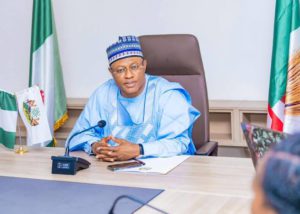
The Kaduna Bus Rapid Transit (KBRT) project is set to become a major economic catalyst, with projections indicating the creation of between 10,000 and 20,000 jobs, the Director General BRT Agency, Engr. Inuwa Ibrahim has said.
He disclosed this during a landmark media consultation and round-table discussion with journalists held on Tuesday at the KADA Hive on Bida Road, Kaduna.
Engr. Inuwa described the engagement as a critical component of the project’s success, emphasizing that the media, as the most important stakeholder in development, is essential for disseminating accurate information to the public about the legacy project of Governor Uba Sani.
“This is the first time in the entire history of northern Nigeria and the second after Lagos,”
“We are not just building a BRT; we are building a fully-fledged, modernised, silver-class BRT system.”
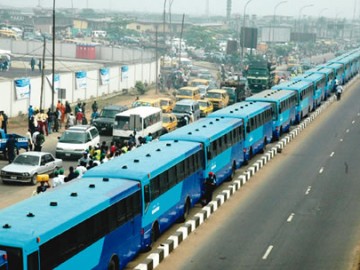
The DG explained that the economic benefits of the 24-kilometre corridor are immense. “We are expecting a fleet of 120 articulated vehicles. When you consider this fleet size, you have drivers, support staff, mechanics, and servicing personnel the economic impact will be very significant,” he said. He also clarified the distinction between the BRT and the existing 100 CNG buses provided by the state government, noting that while the CNG buses were introduced to cushion the effect of fuel subsidy removal, the BRT is a comprehensive, modern public transit system designed for efficiency and reliability.
Providing a detailed technical overview, the Project Coordinator for KBRT, Engr. Aliyu Usman, outlined the next steps and immediate challenges.
He revealed that the project is structured in phases, with Phase One running from Kawo to Command Junction. A major talking point, he noted, is the relocation of the existing Kawo Motor Park to sabon tasha to make way for the modern Terminal One.
According to him, “Engagements are ongoing with transport unions and all relevant stakeholders, including KADSTRA, to ensure a successful relocation,” Usman said.
He also highlighted the critical need to relocate utilities, including water, telecom, and electric cables before construction begins.
Engr. Usman detailed the timeline for the project, stating, “By the end of this October, we are hoping to finalize the design of the whole BRT corridor, the depot, and the terminal.”
He added that the procurement process for the terminal is set to begin next week, with construction on the terminal and depot starting soon after.
However, the main corridor construction is scheduled to commence in the first quarter of next year. To mitigate the impact of construction on traffic, he stressed that the rehabilitation of alternative routes is already in progress.
“We really need the support of the media to disseminate this information and let people know how they can navigate without issues of congestion when this construction starts,” he appealed.
The round-table discussion also featured presentations on the project’s corridor design and construction outlook, alongside an introduction to the KBRT project.
The event underscored the state government’s commitment to transparency and public involvement. “This is a public transit system built for the people of Kaduna,” the DG noted, encouraging residents to follow the project’s progress.
The KBRT is envisioned to serve a metropolis of about 1.3 million people, a population projected to reach 3 million by 2030. With its potential to reduce congestion, improve air quality, and provide a safe, reliable, and affordable transport option, the project is poised to redefine public transportation in Northern Nigeria and serve as a model for other states.