
The establishment of the Ministry of Religious Affairs, by Kebbi State Government has promoted interfaith relations, social harmony, and peaceful coexistence across the state.

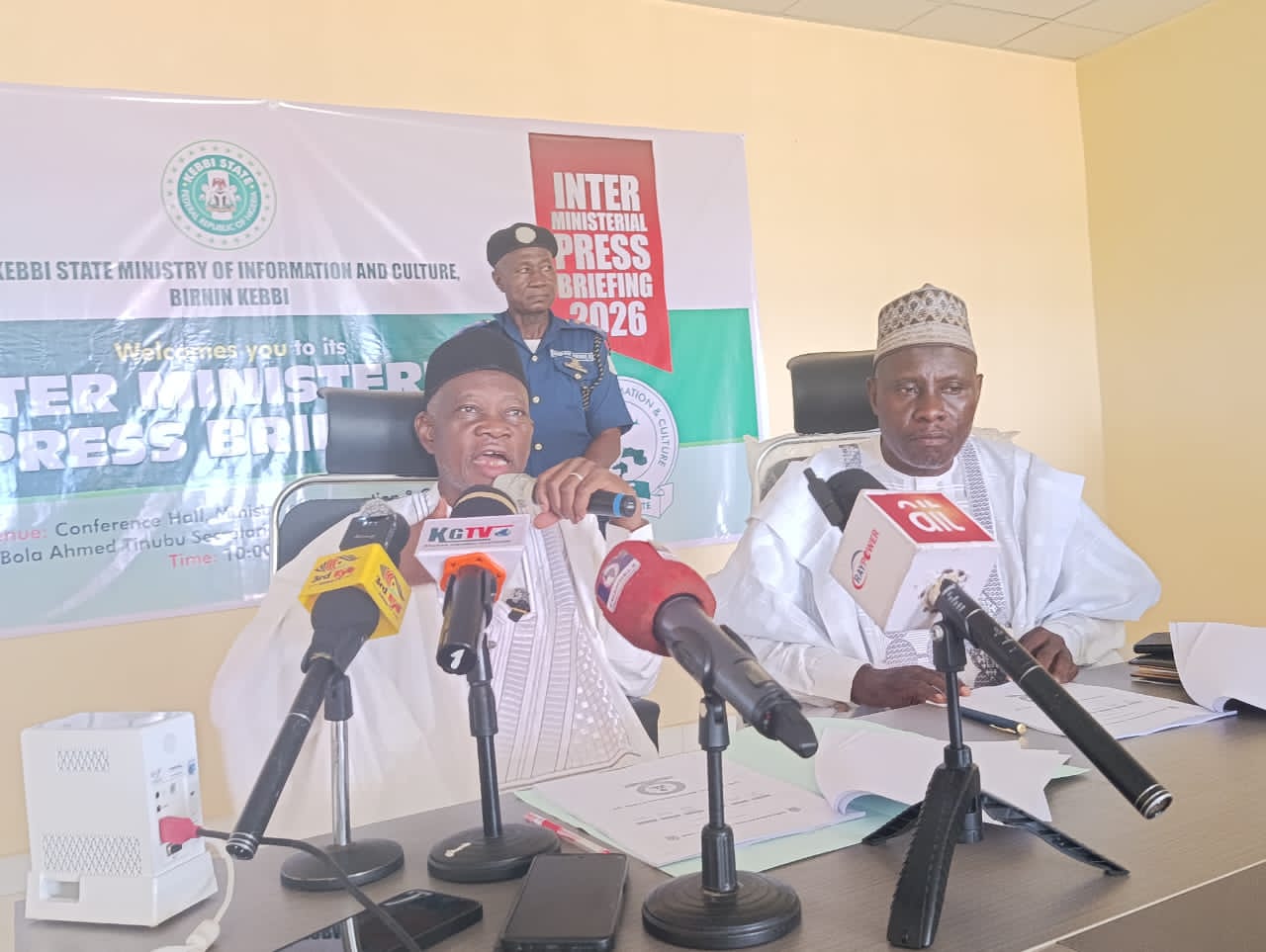
During an interministerial press briefing organized by the Ministry of Information and Culture on Monday, the Commissioner for Religious Affairs, Arch. Muhammad Sani Aliyu, revealed that the creation of the ministry fulfilled a 30-year agitation by the citizens of Kebbi State.

According to the Commissioner, this long-standing aspiration was realized upon the inception of Governor Nasir Idris’s administration. He outlined that the ministry’s core vision centers on driving development through strategic partnerships, collaborations, and mutual understanding, leveraging religion as a tool for both human and physical development.
Arc Sani Aliyu noted that the ministry has also intervened in numerous child welfare and protection cases, which included handling 45 cases of abandoned babies and successfully reuniting 189 missing children with their families, though 52 cases remain unresolved.
Additionally, officials intervened in 42 cases of forced marriage, 57 alleged rape cases, and seven alleged cases of homosexuality.
The Commissioner detailed extensive medical and economic empowerment interventions funded through the state’s Zakat and Waqf programs. Over the three-year period under review, more than 20,000 mental health patients received free psychiatric care and medical support. Additionally, vulnerable small-scale business owners were empowered with grants of ₦500,000 each to boost local livelihoods.
The ministry also addressed several complex socio-religious and behavioral issues during this period. it treated 114 cases of pregnancy outside wedlock, nine cases of marriages contracted after pregnancy, and 132 cases involving girls allegedly harbored by men without parental consent. Furthermore, officials intervened in the cases of 27 women found in bushes under suspected spiritual distress, rescued and hospitalized 43 mentally ill individuals, and handled 169 cases of young and married women found in compromising hotel settings.
The ministry has also managed 1,253 cases related to liquor and drug abuse, and apprehended 17 individuals for smoking Indian hemp and shisha. It also processed 98 court-referred matters, 37 theft cases, and 271 other instances of alleged immoral conduct.
The ministry distributed ₦160 million in cash as Zakat, alongside grains valued at ₦10 million, to vulnerable populations. It also executed an annual Ramadan feeding program providing daily meals to approximately 20,000 needy persons throughout the sacred fasting period.
The commissioner also highlighted that the ministry has prioritized capacity building, regularly organizing training programs for Imams and Islamic scholars to enhance their professional competence. Parallel to this, the ministry consistently hosts interfaith engagements and dialogue sessions designed to promote mutual understanding and religious tolerance among adherents of different faiths.
Arch. Aliyu emphasized that the legal framework is fundamentally designed to protect human rights, dignity, and personal reputation. He noted that Sharia does not aim to deprive anyone of their rights, but instead functions to curb moral decadence, instill social decency, and provide a structured framework for citizens to live in accordance with righteous religious tenets.