
By Dr. Zanna Hassan Boguma FCIPDM FWIP
(Zanna Boguma of Borno)
It was in 2012, during a conference on peace and security in Washington, D.C., that I had an encounter which has remained deeply etched in my memory.
There, I met Professor McKinnon, an elderly Professor Emeritus whose decades of research and experience had earned him immense respect in strategic and historical circles. During our discussions, he presented me with what he described as a highly classified colonial report, dated September 1871, reportedly prepared for the British Home Office.
According to him, the report documented the existence of abundant natural resources, both tapped and untapped, across the Sahelian region of the Lake Chad Basin, with particular emphasis on Northeastern Nigeria and, most especially, Borno.
As I carefully examined the literature, which he described as confidential colonial documents, I came away with the unsettling impression that there had long existed strategic interests by former colonial powers to retain or regain influence over these resource-rich territories.
As our discussions progressed, Professor McKinnon turned to the issue of militant Islamic terrorism in Northeastern Nigeria. He informed me that, during the 1990s, there were discussions surrounding the possible establishment of foreign military facilities within the region. According to him, these proposals met strong resistance from local populations, prompting, in his view, alternative strategic thinking by foreign interests.
He further argued that certain external analysts perceived the people of Borno, particularly the Kanuri, as fiercely attached to their Islamic identity, proud of their cultural heritage, and resistant to external ideological influence. He claimed that some believed their large family structures, demographic growth, and the immense natural resources beneath their soil represented long-term strategic obstacles to foreign interests.
Within this line of reasoning, he suggested that conflict would become the most effective instrument for weakening the society, reducing its population, destabilizing its institutions, and ultimately creating conditions favorable for external exploitation.
According to Professor McKinnon, achieving such objectives required the deliberate creation of prolonged insecurity across the sub-region. He maintained that those pursuing such interests patiently waited for political circumstances they considered favourable, both nationally and across the Sub-Saharan borderlands.
Within this framework, he argued that during the administration of President Olusegun Obasanjo, certain developments created opportunities that aligned with these broader strategic calculations. He contended that many of the structural security problems confronting Nigeria today began to take root during that period, including the early foundations of what would later evolve into the Boko Haram insurgency.
He further alleged that experienced and patriotic military professionals were systematically removed from sensitive positions, weakening the country’s security architecture. In his assessment, Nigeria’s security institutions gradually became vulnerable, creating opportunities for illicit arms trafficking across the nation’s northeastern frontiers. The relocation of weapons from military formations, the unfortunate explosions that reportedly claimed the lives of soldiers, and the weakening of defensive capabilities all formed part of what he considered a disturbing pattern.
From the time of my interaction with Professor McKinnon until today, the security situation across Northern Nigeria has continued to deteriorate. What began as Boko Haram insurgency gradually expanded into multiple theatres of violence. The emergence of ISWAP, the proliferation of Fulani banditry and kidnapping across the North-West and North-Central, the appearance of Lakurawa and other armed groups, together with countless criminal networks operating across Nigeria, have all contributed to an atmosphere of prolonged insecurity.
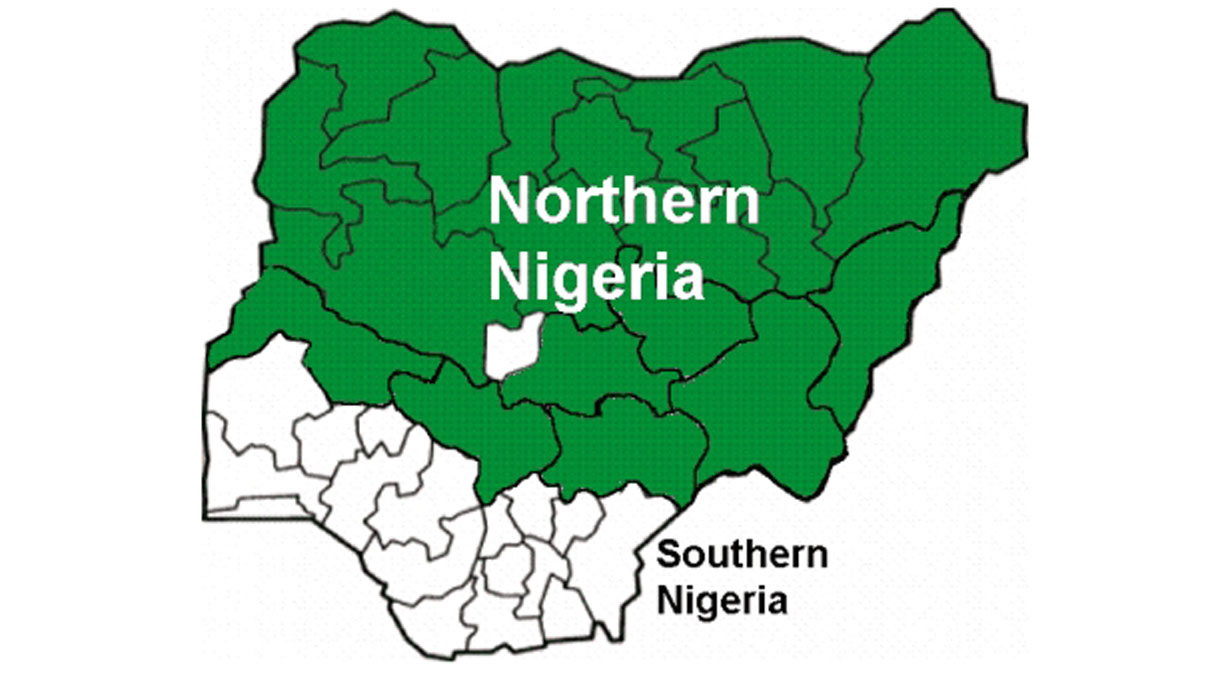
Observing these developments, one may be tempted to conclude that Northern Nigeria, particularly the North-East, North-West, and North-Central, appears to be under relentless assault. Entire communities have been devastated. Thousands of lives have been lost. Traditional institutions have weakened. Economic activities have collapsed in many rural communities. Vast agricultural lands remain abandoned, while millions have been displaced.
To many observers, it increasingly appears as though the region itself is being systematically exhausted, its people impoverished, its leaders targeted, its resources endangered, and its future placed under severe uncertainty.
Those who subscribe to this interpretation believe such outcomes are not accidental but the result of years of careful strategic planning involving insiders, spies, collaborators, surrogates, and paid agents allegedly supported from foreign capitals such as Paris, London, Washington, D.C., and Tel Aviv. They argue that throughout history, major powers have often competed over regions endowed with abundant natural and human resources.
Within this context, some frequently cite statements attributed to former United States Secretary of State Hillary Clinton concerning aspects of American foreign policy in the Middle East and elsewhere. Likewise, references are often made to public allegations that Western interventions contributed to the rise of extremist organizations such as ISIS and Al-Qaeda. Some commentators have further linked these arguments to more recent claims regarding the financing of terrorist organizations, including Boko Haram and ISWAP. Whether accepted or disputed, such claims continue to shape public discourse surrounding the persistence of insecurity in parts of Africa.
These developments naturally provoke difficult questions.
What became of Northern Nigeria’s political leadership?
What became of our traditional rulers?
Where are our academics, our elders, our civil society organizations, our Muslim and Christian religious leaders?
Who cast this evil eye upon our region?
How did we become so vulnerable?
The bloodshed across Northern Nigeria speaks volumes. It demonstrates that today’s North is no longer the North many generations inherited. The speed of our social and cultural transformation is deeply alarming because its trajectory offers little assurance for future generations.
This was once a region celebrated for coexistence, a society where religious minorities found protection, where Christians and Muslims lived side by side, and where discrimination was not the defining feature of public life. It was this spirit of fraternity and shared destiny that the legendary Sir Ahmadu Bello, the Sardauna of Sokoto, sought to institutionalize through his vision of an inclusive Northern society.
These are painful historical questions directed to today’s northern elite, our scholars, teachers, preachers, traditional rulers, politicians, and business leaders.
How quickly have we forgotten?
How deeply has selfishness overtaken collective responsibility?
How has materialism become so overwhelming that, even while the North bleeds before the eyes of the world, many of those entrusted with leadership appear detached from the realities confronting our people?
If a civilization once renowned for brotherhood can abandon those values for narrow political interests, then perhaps it is unsurprising that politics has increasingly become populated by individuals empowered through thuggery, violence, and illicit wealth, while presenting themselves as defenders of Northern interests even as the region continues to deteriorate.
These realities compel yet another question.
Are we simply going to remain silent while witnessing the emergence of new militia groups amid reports of expanding foreign military presence in parts of Northern Nigeria, despite public discussions surrounding the restructuring of certain international intelligence operations?
History reminds us that the presence of foreign military bases has not necessarily guaranteed stability elsewhere. The continued existence of American military installations across parts of the Arabian Gulf has not eliminated insecurity within that region.
Professor McKinnon also referred me to scholarly works examining American military strategy. One such academic, according to him, outlined how military influence can gradually expand through indirect means rather than conventional occupation.
Within that analytical framework, he argued that powerful states and their allies may rely upon sophisticated proxy warfare by facilitating the emergence of armed militant groups within fragile societies. Such militias, once established and sufficiently armed, often evolve into competing factions whose conflicts gradually consume entire nations.
When rival armed groups begin fighting each other, civilian casualties inevitably multiply. State institutions weaken. Humanitarian crises expand. Eventually, foreign intervention becomes easier to justify under the language of peacekeeping, stabilization, or humanitarian responsibility.
Professor McKinnon believed this strategic model had already manifested itself in several conflict zones, pointing particularly to developments in Sudan.
His observations led to another important reflection.
Anyone can become a bandit or terrorist.
But not everyone will become one.
Bad circumstances, injustice, desperation, poverty, displacement, social exclusion, and prolonged instability can push otherwise decent individuals toward criminality or violent extremism. Yet where justice, opportunity, security, and hope genuinely exist, very few people willingly choose terrorism or banditry.
This distinction remains critically important.
For nearly eleven years after my encounter with Professor McKinnon, and indeed for much longer since the insurgency itself began, Nigeria’s Armed Forces have continued battling determined but largely irregular armed groups.
The Nigerian military remains one of Africa’s most experienced professional institutions. Its officers and soldiers have earned distinction in numerous international peacekeeping missions across the continent. Their courage and sacrifice cannot be questioned.
Yet courage alone cannot compensate for inadequate logistics, insufficient technological capabilities, intelligence gaps, operational constraints, and declining morale.
Years of prolonged warfare have placed extraordinary pressure upon military personnel. Repeated attacks on military formations, the loss of highly experienced commanders, and the increasing sophistication of insurgent tactics demonstrate that the security challenge has evolved far beyond conventional counterinsurgency.
Ultimately, no military, regardless of its professionalism, can succeed without sustained political commitment, adequate resources, strategic clarity, and unwavering national unity.
The constitutional responsibility of every government is to protect the lives and property of its citizens. Where political interests override national security priorities, the consequences inevitably become visible on the battlefield.
Northern Nigeria stands today at a defining moment in its history.
Whatever one’s interpretation of the origins of this crisis, whether viewed through the lens of geopolitical competition, internal governance failures, socioeconomic neglect, institutional weaknesses, or a combination of these factors, one undeniable reality remains: our people continue to suffer.
The North deserves peace.
Nigeria deserves security.
History will ultimately judge not only those who caused these tragedies, but also those who saw them unfolding and chose silence over action.