
By Aliyu Abdulhadi, PhD
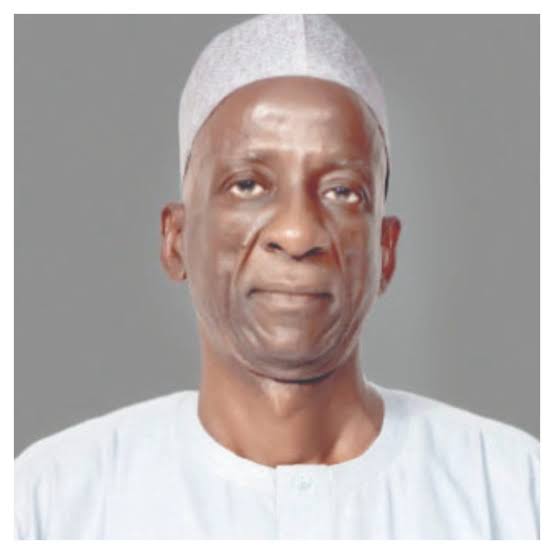
I watched Dr. Bashir Kurfi’s interview with Trust TV, which was published on YouTube. In my view, anyone who listens to the interview carefully could conclude: “It was a day when mistakes had consequences.”
Before this interview, Dr. Kurfi had granted another interview following a meeting in Katsina that was disrupted by suspected thugs. At the time, he also made several allegations, yet the government did not take any action against him.
In my opinion, the first mistake was that Dr. Kurfi should have recognized that he is an activist, a university lecturer, and someone involved in politics. As such, any public statement he makes should be evidence-based, well-founded, and consistent with the responsibilities of his position.
However, in this interview, he made a number of allegations in what I consider a hasty manner, without presenting evidence that had been established through legal processes. Instead, many of the claims resembled discussions often heard in informal gatherings.
The second issue concerns security, particularly allegations relating to terrorism and banditry. This is an extremely sensitive matter in Nigeria and should not be treated lightly.
In the past, prominent figures have been invited to explain similar allegations. For example, General Theophilus Yakubu Danjuma once alleged that some security personnel were collaborating with bandits, prompting calls for him to provide further clarification. Similarly, former Plateau State Governor Joshua Dariye faced serious consequences over security-related issues. For this reason, security matters are far too important to be handled casually.
The third issue is the involvement of opposition political figures. In my opinion, their intervention complicated the matter instead of helping to resolve it. Once a mistake has been made, the most appropriate response should be to seek reconciliation and a peaceful resolution.
The first to comment was Ahmed Babba Kaita, the governorship candidate of the ADC. He was followed by Mustapha Inuwa of the PDP faction aligned with Tanimu Turaki, and Senator Yakubu Lado, who is associated with the PDP faction linked to Nyesom Wike. Some other Katsina elders who spoke on the matter also appear to have connections with opposition parties.
This has led some government supporters, members of the ruling party, and some civil society activists to question whether Dr. Kurfi has any political relationship with opposition parties. It has also fueled debate on social media over whether opposition politicians are using him to criticize the Katsina State Government.
Reports published by some media organisations also suggested that one reason Dr. Kurfi was denied bail during his first court appearance was his alleged failure to submit his statement to the police within the required time. If that information is accurate, then it would represent another mistake on his part.
Another question is this: if the government provided an opportunity for the remarks to be withdrawn or for the dispute to be resolved before the matter reached court, but that opportunity was not taken, can the government be blamed for pursuing legal action? In such circumstances, the government may believe that following due legal process is necessary to protect its reputation. Otherwise, the controversy could continue to be used against it, particularly as the election season approaches.
My advice is simple:
If people genuinely want to help Dr. Kurfi, respected elders should intervene by seeking reconciliation, encouraging dialogue, and pursuing a peaceful settlement.
Nevertheless, having considered the contents of the interview, I remain of the opinion that it was a day when mistakes had consequences.
Aliyu Abdulhadi, PhD, University lecturer and member of the Association of Nigerian Authors (ANA), Abuja Chapter.