
- By Ibrahim Kaula Mohammed
“Leadership is not about sitting in an office. It is about going to the people.”
Those were the quiet but powerful words Governor Dikko Umaru Radda shared as he concluded his nine-day, 34–Local Government tour—a journey that did more than assess development projects. It revealed the heart of a state, the resilience of its people, and the sincerity of a leader who believes governance must touch lives, not headlines.
But what does it really mean for a governor to step into every LGA, from the bustling metropolis to the most remote village?
And what did Governor Radda discover in these nine days that reshaped his mission for Katsina?
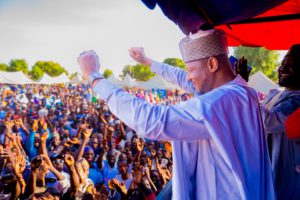
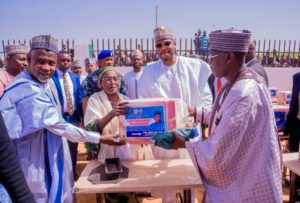 The answer began unfolding the moment he entered the first community—thousands of citizens lining the roads, waving, praying, cheering. Not out of obligation. Out of genuine connection. And everywhere he went, something else stood out: the impact of the Community Development Programme was visible in every ward and every village. Banners hung proudly in all the LGAs, welcoming him with a single name they now call him — “The Community Governor.”
What does it say when ordinary people leave their farms, shops, and homes just to welcome their leader?
It says they trust him.
It says they believe in where he is taking them.
And this trust was evident from the very beginning of the tour — starting in the Funtua Zone.
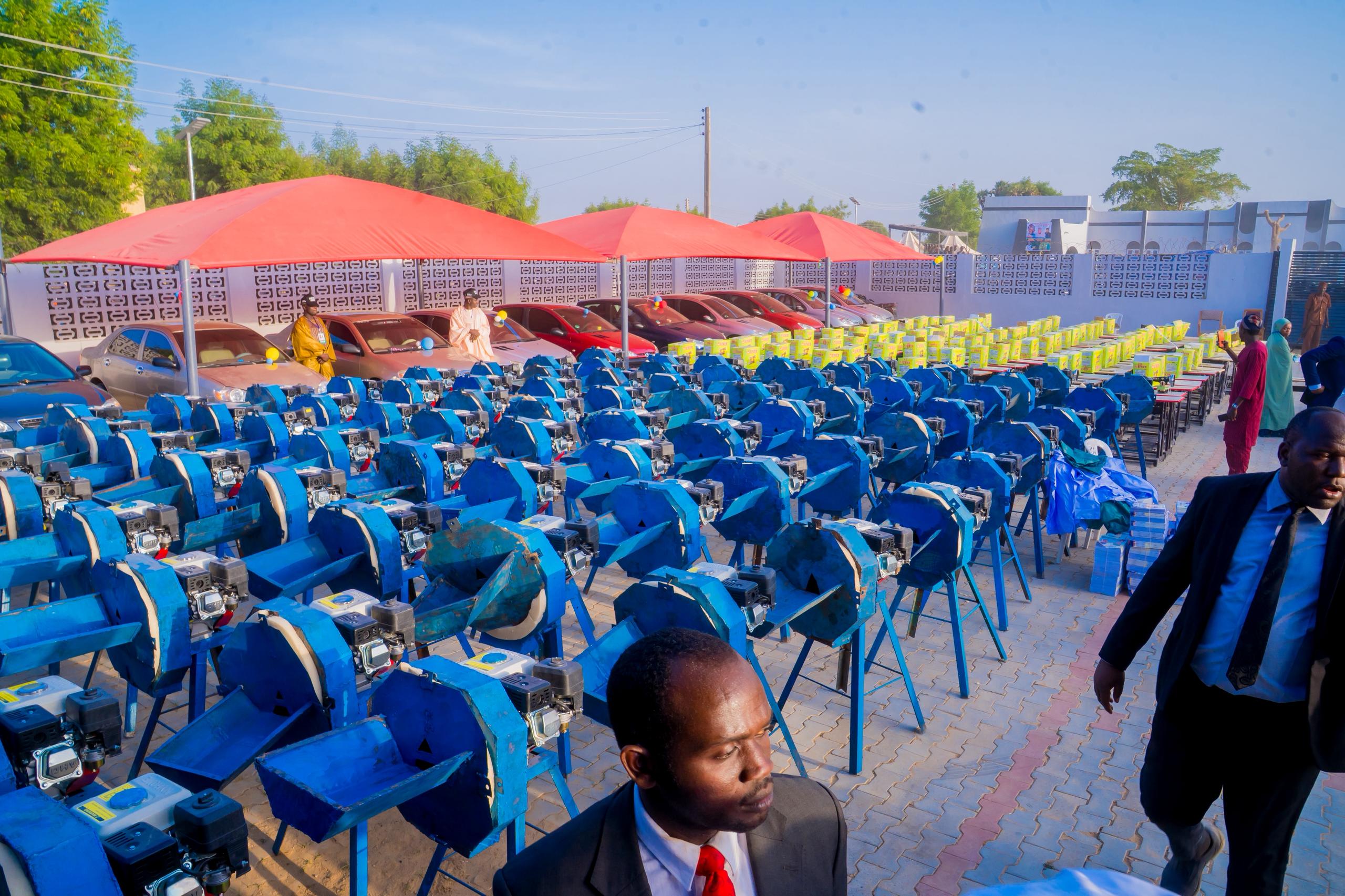
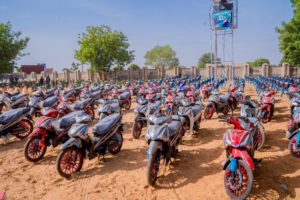
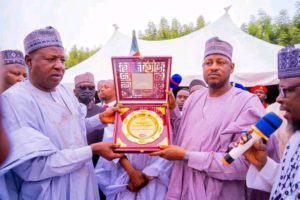
In Danja, where the journey began, the Governor met community leaders and inspected agriculture, health, education, and security projects, officially kicking off the statewide grassroots assessment. Malumfashi witnessed the empowerment of 1,859 residents with ₦176 million in grants and tools. Kafur hosted livelihood interventions. In Sabuwa, he flagged off the ₦18.5bn Sabuwa–Tashar Bawa–Rafin Iwa Road and empowered 1,500 women, youths, and schoolchildren. Dandume rolled out a multi-ward empowerment scheme, while Bakori strengthened basic education through learning materials. In Funtua, 360 residents received work tools and grants. Kankara distributed irrigation tools, vehicles, motorcycles, and POS machines. Musawa’s farmers and artisans received fertilizers, equipment, and cash. In Matazu, he commissioned agriculture and water projects but also supervised rescue operations following a tragic accident that claimed four lives. Each moment was proof that this tour was not a photo show—but deliberate grassroots governance.
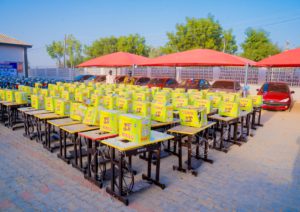
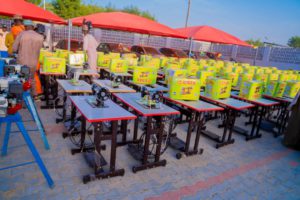 In each local government, the atmosphere was the same: traditional rulers seated with dignity, youths lined up with expectation, elderly women shedding tears of joy, farmers offering blessings. The Governor listened—not as a superior, but as a son of the land. He sat with district heads, spoke with traders, inspected clinics, schools, rural roads, market stalls, and water points. The tour was not ceremonial. It was intentional.
And in the Daura Zone, this intentionality deepened.
Bindawa welcomed him with solar pumps, motorcycles, books for students—and 600 opposition decampees. Kankia received ₦250m road projects and new water commitments. Kusada gained fertilizers and farming tools. Ingawa received a ₦4.4m scholarship for 204 students and a ₦30m X-ray machine. Daura witnessed major milestones—from the 13.5km Western Bypass to the upgraded Federal Teaching Hospital to over 1,200 empowered beneficiaries. Sandamu, Baure, Zango, Maiadua, Dutsi, Mashi, and Mani each showcased empowerment that could be touched and felt: motorcycles for youths, grinding machines for women, fertilizers for farmers, livestock for families, and cash support for the vulnerable.
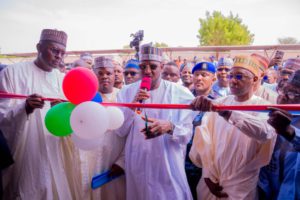
 And just as striking was the presence of the Community Security Watch Corps.
They were everywhere—visible, organized, alert—showing in real time how communities were actively protecting their own environment. The Governor was seeing his actions live, witnessing how a policy on paper had become a living system on the ground.
Let’s ask ourselves: how many governors in Nigeria take nine straight days to reach every LGA, face the people directly, and hear their truth without filters?
This is what genuine leadership looks like.
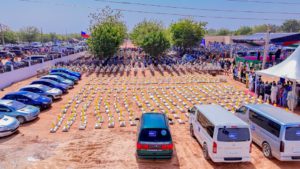
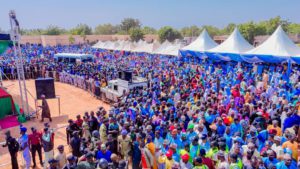
Everywhere he went, the Governor encountered a story—sometimes inspiring, sometimes painful. In Funtua, a widow told him how local empowerment programs helped her start a small grain business. In Daura, a group of youths proudly showcased machines they received from their council chairman. In Danmusa, where the Katsina Zone began, thousands welcomed him as he oversaw the distribution of 1,000 bags of rice, 11 vehicles, 100 motorcycles, 100 POS machines, and more. He then ordered the engineers to inspect the Danmusa–Yantumaki Road that is now scheduled for reconstruction.
And behind each story was a quiet reality: local government autonomy is working in Katsina.
The empowerment continued across the entire Katsina Zone.
In Safana, 1,322 beneficiaries received tricycles, tools, flour bags, and cash—the largest empowerment so far. In Dutsinma, “the town that shaped my life,” 1,000 more residents benefited. Kurfi saw 3,445 beneficiaries and updates on major projects. Batsari and Wagini gained five new secondary schools and a cassava processing centre. Jibia received a new maternity ward and hospital upgrades. Kaita celebrated a ₦1bn Federal Government-approved Earth Dam. Batagarawa received new projects and strengthened traditional institutions. Charanchi gained new roads and a massive empowerment package. Rimi received ₦30.8m assistance and a new central mosque.
And the grand finale in Katsina LGA sealed the message with upgraded Legislative Chambers, new offices, a modern ICT Centre, new official vehicles, and a new Primary Healthcare Centre—all accompanied by reassurances on the ₦34bn Health Imaging Centre. Business mogul Alhaji Dahiru Mangal declared boldly:
“We will stand behind you until 2031.”
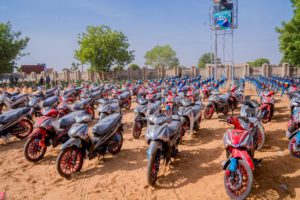
Motorcycles. Grinding machines. Fertilizers. Livestock. Cash interventions.
This wasn’t theory on paper. It was empowerment you could touch, see, and feel.
Think about it—how many states talk about autonomy but deliver nothing at the grassroots?
Governor Radda saw progress, but he also confronted challenges. Communities pleaded for more rural access roads. Some asked for health posts. Others requested water schemes, school renovations, and farming support. And the Governor responded the only way true leaders do—by acknowledging, documenting, and promising to act, not with speeches, but with commitment.
By the last day of the tour, it became clear that the people were not welcoming a convoy.
They were receiving a covenant.
In several frontline communities, traditional rulers spoke of improved security and renewed calm. Youth groups expressed gratitude for job creation initiatives. Women’s cooperatives shared how economic interventions had changed their homes. Everywhere, progress was visible—but so was the hunger for more.
Governor Radda often paused during the tour to reflect with his team:
“If the people trust us, we must honour that trust with hard work.”
Let this sink in: how many governors come away from tours with lists of action points, not political pledges?
This is what responsibility looks like.
As the Governor returned to Katsina, children chased the convoy, mothers waved, youths shouted blessings, and elders whispered prayers. The entire journey had become more than an assessment tour—it became a reaffirmation of the bond between a leader and his people.
So, what does the tour truly mean for Katsina?
It means the people are seen.
It means their concerns matter.
It means development is no longer abstract.
It is lived. It is real. It is happening.
Under Governor Radda’s Building Your Future agenda, is Katsina moving forward?
The evidence says yes.
Is Katsina strengthening local governance?
The empowerment programs say yes.
Is Katsina improving security cooperation?
Frontline communities say yes.
Is Katsina advancing rural development?
The cries of gratitude from villages say yes.
Is Katsina becoming a model of people-centered leadership?
The 34-LGA tour says yes.
And as Katsina marches into 2026 and beyond, the question is no longer whether the state can rise.
The real question is: who will keep up with it?
Because when a state leads with sincerity, accountability, and courage, everyone benefits.
Ibrahim Kaula Mohammed is the Chief Press Secretary to the Katsina State Governor