
Across Katsina State and much of Northwest Nigeria, banditry has become a shadow that stalks daily life. From kidnappings and cattle rustling to rape and extortion, the violence has disrupted communities, crippled local economies, and left families living in fear.
Faced with what they describe as government inaction, a group of prominent citizens under the umbrella of the Katsina Security Community Initiative (KSCI) is stepping in to chart a new path.
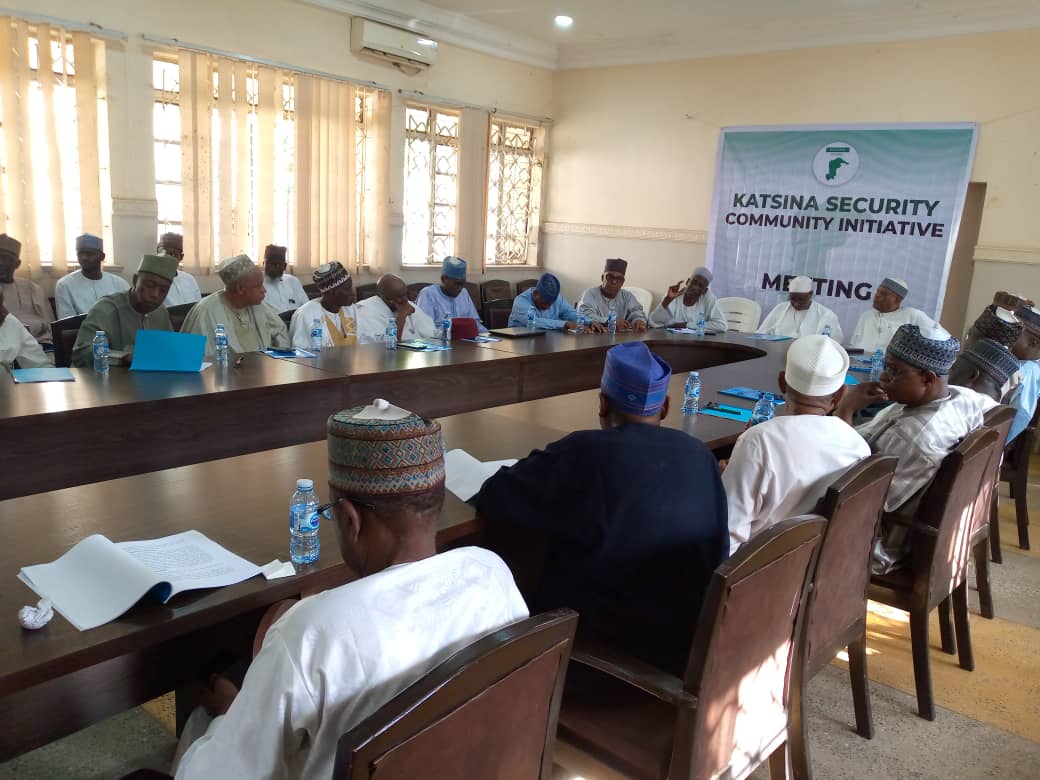
At a recent gathering in Kaduna, elder statesmen, retired security officers, academics, and community leaders came together to confront the crisis. For many, the message was clear: security cannot be left to government alone.
Dr. Usman Bugaje, one of the state’s respected voices, declared bluntly that insecurity has thrived because of a “vacuum in leadership.” He warned that complacency would only embolden criminals. “We either rise up and tackle the issue before they come for us, or we wait until it’s too late,” he said.
Security expert Dr. Yahuza Getso echoed the call for a community-driven solution. He outlined a framework that mobilizes local structures—from polling units to vigilante groups—into coordinated security cells that would partner with official agencies. “These criminals are not strangers,” he argued. “They are known within their communities. The solution must also come from within.”
Others at the meeting, such as Alhaji Suleiman Halliru, lamented the failure of leadership and the neglect of security as a constitutional duty. Comrade Ali Attahiru warned that offering amnesty to bandits without justice for victims was “a betrayal of those killed, raped, and displaced.”
For the KSCI, the meeting was not a one-off. Already, the group has held sessions in Abuja and Kaduna, with plans to extend its engagements to Zaria, Kano, and ultimately Katsina itself. According to co-convener Hon. Jamilu Mohammed Danmusa, the goal is to consolidate ideas from citizens and present them to the state government as actionable strategies.
What unites these voices is a conviction that ordinary people can no longer remain silent or passive in the face of worsening insecurity. As Dr. Bugaje put it, “The choice is ours.”