Iran has launched a fresh barrage of approximately 25 missiles targeting Israel hitting at least six cities across the nation.
This latest attack, occurring on the eighth day of heightened hostilities between the two regional rivals, marks another dangerous donation in a conflict that continues to defy international calls for de-escalation.
The missile onslaught, which took place on Friday, June 20, 2025, saw projectiles impacting various urban areas, including Tel Aviv, Beersheba, Ramat Gan, and other locations in the central and southern regions of Israel.
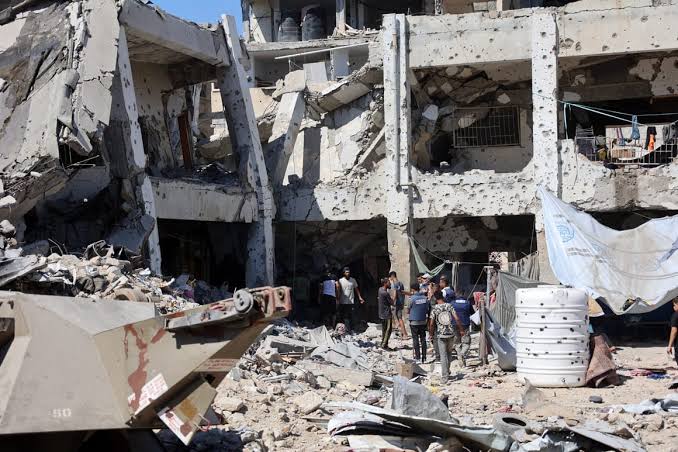
While precise details on all affected cities are still emerging, initial reports confirm significant damage and multiple casualties, further fueling an already volatile situation.
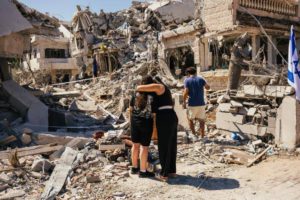
One of the most concerning impacts was reported in Beersheba, where an Iranian missile struck near a technology park with military installations, causing heavy damage to buildings.
Al Jazeera reported that seven people were lightly injured in Beersheba, and the attack temporarily shut down the city’s central rail station. Additionally, a Microsoft office located within the technology park sustained damage, highlighting the indiscriminate nature of the strikes.
In the Tel Aviv metropolitan area, missiles hit residential and commercial zones. One notable impact occurred on Jabotinsky Street in Ramat Gan, a suburb of Tel Aviv, damaging a four-story building and affecting adjacent high-rises and homes. Two people were severely wounded, and 23 others sustained lighter injuries in this incident. Such strikes on densely populated civilian areas underscore the increasing humanitarian cost of the conflict.
The Israeli Ministry of Health reported that a total of 271 people were wounded by Iranian missile attacks on Thursday, June 19, with four individuals sustaining serious injuries. This latest barrage on Friday is expected to add to that grim tally. The Iron Dome and Arrow air defense systems were activated, with Israeli officials reporting the interception of a significant number of incoming projectiles. However, the sheer volume and velocity of the attacks appear to have overwhelmed some defensive measures, allowing several missiles to penetrate and cause damage.
This fresh wave of attacks follows a series of intense exchanges over the past week. The conflict initially flared on June 13, 2025, when Israel launched a series of air and drone strikes against Iranian territory, reportedly targeting nuclear and ballistic missile capabilities, as well as senior military officials. Iran retaliated swiftly with large-scale missile and drone attacks, dubbed “Operation True Promise III.”
Since then, both sides have continued to exchange fire, with Iran launching multiple barrages and Israel conducting strikes on dozens of sites in Iran, including nuclear facilities at Natanz and Khondab (formerly Arak), and military installations. The conflict has seen both nations accuse the other of targeting civilian infrastructure, a claim that further complicates efforts to de-escalate. On June 19, an Iranian missile reportedly struck Soroka Hospital in Beersheba, though Iran claimed its primary target was a nearby military intelligence headquarters. Similarly, Iran’s health ministry stated that an Israeli missile strike damaged a hospital in Tehran and a medical clinic in Kermanshah.
The international community has voiced grave concern over the spiraling violence, with urgent calls for a ceasefire and diplomatic engagement. However, as the conflict enters its second week, both Tehran and Jerusalem appear committed to their respective military responses, with little sign of immediate de-escalation. The continuous volley of missiles and counter-strikes not only poses an immediate threat to the lives of civilians but also risks drawing in other regional and global powers, further destabilizing an already volatile Middle East