About 100 000 farmers would be empowered by the Zamfara State Government through the Fadama III programme over the next four years.
The farmers will be empowered with the necessary equipment and seeds as part of government resolve to take the required steps towards realising our targets in the agricultural sector, which is the most vital sector of the economy of Zamfara State.
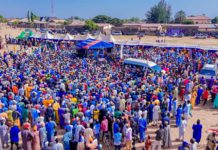
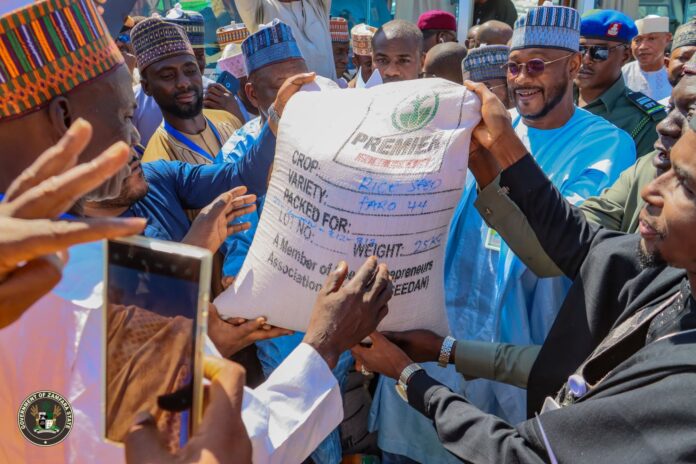
This was disclosed by the Zamfara State Governor, Dr Dauda Lawal on Thursday, during the flag off of the Nigeria Corona Virus (COVID-19) Action Recovery and Economic Stimulus (N-CARES) programme with the distributions of farm inputs and agricultural assets.
Gov Dauda announced that “as you are aware, the COVID-19 Action Recovery and Economic Stimulus Programme is a multi-sectoral programme centred around three critical result areas and is designed to address specific challenges and harness opportunities on our path towards a robust post-pandemic recovery.
“Under FADAMA 3, the Result area focus is on increasing food security and ensuring the safe functioning of food supply chains for our vulnerable households.”
He said the Zamfara State government will provide essential input support and services, construct and rehabilitate access roads, and allocate assets for production and mitigating food loss and waste.
“In this third cycle, our key objective is to improve the productivity of 11,760 farmers directly by providing them with vital inputs such as fertilisers, herbicides, insecticides, improved seeds, and seed dressing chemicals
The statement said Governor Dauda Lawal’s administration is determined to revamp the agricultural sector by providing adequate support to farmers.
During his speech at the kick-off event, Governor Dauda Lawal reiterated his administration’s commitment to providing social interventions for less privileged and vulnerable individuals in Zamfara.
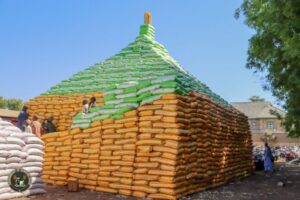
For the upcoming dry season, we have allocated 33,000 bags of fertiliser – comprising 22,000 bags of NPK and 11,000 bags of Urea.
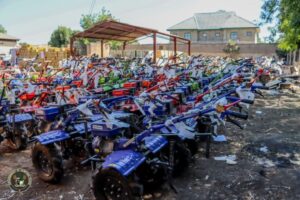
“Also, over 700 power tillers and seeds for rice and maize will be distributed to 19,000 farmers. Furthermore, 735 groups of ten farmers each will be empowered with Power Tillers, and 2,550 individuals will receive small ruminant animals.”