By Mohammad Lawal Maikudi
The Katsina State Transport Authority, KTSTA, says it has enormous challenges in delivering on its mandate but the challenges. are surmountable.
The three critical challenges are insecurity, high cost and counterfeit spare parts and high cost of fueling its vehicles especially with the fuel subsidy withdrawal by the Federal Government.
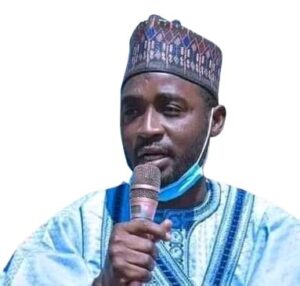
This was disclosed by the General Manager of the authority, Alhaji Haruna Musa in an interview with kunnengari online in his office in Katsina on Thursday.
The insecurity situation has been affecting its operations on all its route within and out the state. Katsina State is one of front line insecured states in the North West and the situation has claimed the lives of thousands of persons and destroyed properties worth billions of naira, displaced thousands of families and making life very traumatic for generality of the populace in the last few years.
Alhaji Haruna cited an incidence when one of his drivers was shot and killed in broad daylight along Katsina – Jibia road and attacks on Katsina – Batsari road.
These attacks forced the authority to abandon the Katsina – Jibia-Sokoto road and had to take to Sokoto through Funtua – Gusau which takes longer man hour and consumes more fuel. while drivers and commuters move about in fear of terrorists attacks.
But the General Manager was full of gratitude for efforts being put in place by Governor Dikko Umar Radda in addressing attacks by terrorists in the state, saying that will enhance their services.
The issue of counterfeit and high cost of spare parts remains one of the big challenge but since he was an experienced transport operator even before joining the services of the authority, he has been employing his experience to identify genuine spare parts but have to bear the cost of parts as the issues are determined by market forces
On the increase in cost of fueling its vehicles, Alhaji Haruna lamented that there was little they could do to cut. corners as they buy from the open market.
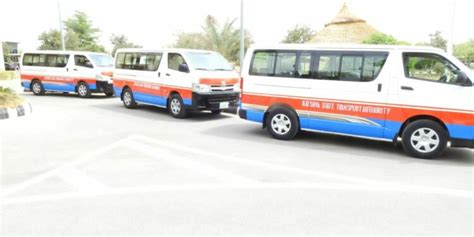
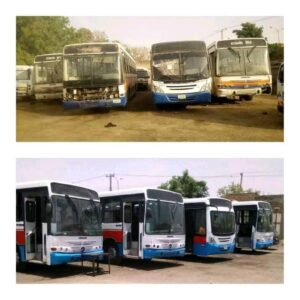
Alhaji. Haruna said KTSTA remains. grateful to. Governor Dikko Radda for supplying it with 40 brand new vehicles because the gesture will reduce the expenditure on maintaining its fleet and the tendency of vehicles breaking down on the road is greatly minimized.
The 40 buses were launched last week by Governor Dikko Radda during the unveiling of Katsina Katsina Community Watch Corps at the. Muhammadu Dikko Stadium in Katsina.
The launch of the buses was cushion the pains of the removal of subsidy by the Federal Government of Nigeria but the gesture will boost the operations of the KTSTA in providing the transport need of the public.
On passenger turn out for its services, the General Manager said the patronage has been very. impressive from Katsina to all its destinations, so also for incoming Katsina routes
KTSTA is one the vibrant transport agencies in Nigeria going by the number of buses plying the Nigerian roads due to the sustained quality of their operations which meets the transport needs of commuters.
Alhaji reminded that the primary mandate of Katsina State Transport Authority is to. provide safe, comfortable and affordable transport services to people of Katsina State and Nigeria.
Ideally, the authority subsidized its services with 20 per cent charged by private transport operators but today, despite the increase in fueling cost, it offers more than that to commuters and that is they always wait to board the KTSTA buses, This has made it to stablise the transport. business. in Katsina State and Nigeria to the benefit of commuters
On the behaviour and approaches of commuters, Alhaji Haruna expressed appreciation and pray for relationship to grow and develop better
Recall that Katsina State Transport Authority was inherited from Kaduna State Transport Authority when Katsina State was created in 1987 but was shut down in 1990. It was however re-established in 1992 by the first executive Governor of Katsina State Alhaji Sa’idu Barda.
.
It is a governmental non-profitable organisation headed by the General Manager ably assisted by management members which includes the Secretary, workshop manager, operations manager, director planning research and statistics (PRS), director finance and account, chief internal Auditor among others.
Like other sister transport organisations, KTSTA uses different categories of buses in carrying out its operations which includes: – 52 – Seater Marcopolo 1721 – 30 – Seater Toyota Coaster – 18 – Seater Toyota Hiace – 08 – Seater Sharon
Similarly, KTSTA renders services such as International routes – Inter-State Services, Intra-State Services and Hire Services
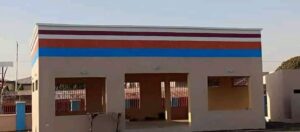
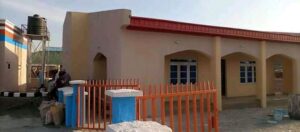
Its main headquarters is located along Nagogo Road, at old ministry of works Kofar Durbi Katsina, main deport at Kofar Yandaka and main workshop at Kofar Guga Katsina.
KTSTA vission is to become the most visible mass transit authority in the country and beyond by providing dependable, affordable, comfortable, safe, and sustainable transportation services through best practices and ethical processes.
It strives to provide safe, affordable, and comfortable transportation services to commuters across the country and beyond, without compromising safety, by utilising quality personnel and resources and by providing cost-effective, sustainable, and problem-solving solutions that help its customers achieve their goals
Today KTSTA operates on several routes and have parks in several locations in the state,, especially the local government headquarters in the state. Such locations include Daura, Funtua, Malumfashi, Dutsinma, Mani, Jibia, Ingawa, Batsari etc.
It also provide transport services to commuters within Katsina City, the state capital.
On interstate services it plies Katsina-Kano route, Katsina -Kaduna route, Katsina- Abuja route, Katsina -Jos, Katsina – Bauchi, Katsina- Borno, Katsina – Sokoto, Katsina- Gusau routes.
Despite the biting economic challenges in the country, KSTA has been able to withstand the challenges.
Due to the management acuremen demonstrated by the officers of the authority, KTSTA remains afloot providing safe, comfortable services to its customers.
When the Nigerian Government withdraw fuel subsidy, the agency was adversely affected due to rise in cost of running its operations